The world of wearable technology is evolving rapidly, and smart glasses have emerged as a leading innovation. Once confined to science fiction, these devices are now becoming sleek, functional tools that blend advanced processing power with compact, user-friendly design. Early models faced challenges such as bulky frames, limited battery life, and user hesitation, but the industry has learned from these setbacks.
Today’s smart glasses prioritize comfort, style, and ease of use, reflecting a shift toward designs that integrate seamlessly into daily life, similar to the evolution of smartphones from technical novelties to essential personal accessories.

Smart Glasses Market Overview
The market of smart glasses in the whole world is passing the phase of strong growth, which can also be proved by the growing demand and the maturity of technologies. The market size is also expected to be very high in the coming years as projections show that it could be reaching up to USD 6,629.1 million by 2032 at a Compound Annual Growth Rate (CAGR) of 29.2%, or USD 4,129.3 million by 2030 at a CAGR of 29.4%.
This stable high growth rate highlights the active and innovative character of smart glasses industry. This is mainly attributed to a number of the main factors which are spurring such a high market growth.
The first factor is fast development of Augmented Reality (AR) and wearable technology, and the second is the growing number of companies requesting its usage in different industries such as consumer, enterprise, and healthcare.
One of the strongest accelerators is continuous work and substantial implementation of the fifth generation of cellular networks, 5G. Moreover, such an aspect as the introduction of Artificial Intelligence (AI)-enhanced functionality seems to be the crucial trend within the market, as it contributed to the improvement of these devices and their functionality to a large extent.
The development of the market does not run without complications. Expensive production processes, battery life and design complexities remain a roadblocks to mass production. Notwithstanding these challenges, the market is highly geographically advanced with North America taking up about 38 percent of the market share and Europe coming next with about 29 percent.
Asia Pacific is also a fast developing region and is expected to grow by biggest margin as more and more investments are being made to improve the technological infrastructure and also a huge manufacturing base.
| Report Attribute | Details |
| Historical Period | 2020-2023 |
| Base Year | 2024 |
| Forecast Period | 2025-2032 / 2024-2030 |
| Smart Glasses Market Size 2024 | USD 853.8 million / USD 878.8 million |
| CAGR (Forecast Period) | 29.2% / 29.4% |
| Smart Glasses Market Size 2032/2030 | USD 6,629.1 million / USD 4,129.3 million |
| Key Growth Drivers | Rapid advancements in AR/wearable technology, rising demand across consumer/enterprise/healthcare sectors, integration of AI-powered features, miniaturization, prescription-ready models, expanding ecosystem connectivity, 5G technology developments |
| Key Challenges | High manufacturing costs, limited battery life, design complexities |
| Leading Regions | North America (~38%), Europe (~29%), Asia Pacific (fastest growth anticipated) |
Applications of Smart Glasses Across Industries
Smart glasses have significant transformative potential as they prove very versatile tools.
In the enterprises and industrial market, the devices are gaining a lot of momentum as they help companies to optimize their workforce, collaborate across geographies in the real-time, and improve their operational efficiency by many folds.
In industrial manufacturing, the wearers of smart glasses can receive handy instructional aids, that enable the assembly line technicians to have step-by-step instructions, exemplification, and video placed directly in their line of view, resulting in quickened work rate and fewer mistakes. Such ability deals even with addressing the problems in real time via using AI and live remote support.
Healthcare providers have been upgrading to telemedicine, remote diagnosis, and surgical help by using smart glasses in the healthcare industry. The capability to see the images of the real time data and the patients and do hands frees documentation can aid a lot in delivering care. Take, as an example, the remote doctors and surgeons can watch what the medical professionals with the smart glasses observe and get step by step instructions on the procedures, which can shorten the time it takes to respond in cases of emergencies and make diagnosis faster.
In addition to the area of professional use, a large growth driver is the consumer market. The availability of features that address day to day needs like music play, engaging in richer gaming sessions, and hands-free communication adds some demand in this segment.
Understanding AR, VR and MR
Immersive technology world can be quite complex and is commonly described with three main terms namely Virtual Reality (VR), Augmented Reality (AR), and Mixed Reality (MR). To get a feeling of their capabilities and design philosophies of smart glasses, they are important to understand their differences.
● Virtual Reality (VR): This is a technology that will totally involve the user in a virtual world, thus superseding his/her perception of the real world. VR headsets often cut off any other light and any form of sensory information to effect, taking a user into a totally digital world.
● Augmented Reality (AR): In place of this, AR superimposes digital information, pictures, or 3D models on the user by allowing them to see the real world in real-time. The real world is completely visible and known yet it is now augmented by computerized data. Smart glasses were designed using transparent displays which enable the wearers to see through the glasses yet at the same time enjoy digital projection. This design strategy makes sure that the users are conscious of what is going on around them physically.
● Mixed Reality (MR): The next level of AR and a more interactive one, MR, allows digital objects not only to be layered but also interact with the real world, and be fixed upon in more integrated fashion.
This is frequently done by use of extensive spatial mapping and knowledge of the physical world so that virtual items may be made to seem to be in the actual world of the user and are bound to obey real world physics.
Core Display Technologies of Smart Glasses
The capability of smart glasses to display digital content, displaying transitions without interruptions, is made by means of very advanced display technology. A number of the most prominent strategies take precedence in the market today, and they all present their own benefits and engineering issues.
● Waveguide Technology: This is a major process that is used in see-through head-mounted display. The waveguides work with the help of the light of a minuscule micro-display engine through a thin and clear lens to the eye of the user. This forms virtual image, which seems to float in the real world transparently. These are of different types, e.g., diffractive, holographic, and reflective waveguides.
● Micro-OLED Displays: These are ultra small & ultra high resolution Organic Light-Emitting Diode (OLED) displays. They are normally combined with highly sophisticated optical principles e.g.
birdbath optics or waveguides to create images into the field of view of the user. Micro-OLEDs receive exceptional praises due to their capacity to supply excellent contrast ratios, excellent color, and quick re-refreshes that are crucial to draw immersive and fluid visuals.
● Si-OLED Micro Projection Technology: This technology is used by Epson in Moverio line and makes the pictures sharp and achieves effective integration of digital content with the outside world. Si-OLED micro projection focuses more on visual quality and seamless vision where the augmented reality can feel natural as digital information can become a natural extension of the real-world.
● Virtual Retinal Display (VRD): Less popular, but very innovative method is VRD, or a retinal scan display, which directly projects a raster display onto the retina of the eye. Bypassing conventional display panel, this technology which is developed by companies such as the MicroVision, Inc. is intended to provide very clear and bright images.

Smart Glasses Essential Components
Off the screen, smart glasses are folded up computers, with a very well developed assembly of components that makes them intelligent and allows smooth connectivity with both the wearer and their surrounding.
Sensors:
Smart glasses are equipped with various sensors like other sophisticated computing gadgets used to gather a lot of data. These may consist of accelerometers, gyroscopes and magnetometers which are used in conjunction with each other to offer 9-Degrees of Freedom (9-DoF) or 6-Degrees of Freedom (6-DoF) tracking, which are extremely important in determining the position of the head and spatially.
The ambient light sensors automatically adjust the brightness of the device based on environmental lighting conditions allowing clearer visualization, whereas GPS modules utilize accurate location awareness.
The using of proximity sensors can tell when the glasses are to be worn, power can be automatically controlled or content paused.
Artificial Intelligence (AI):
Another trend observed in the market is the intensive integration of Artificial Intelligence (AI) powered functions. This makes smart glasses active display devices that can be smart assistants able to provide on-demand decision making, workflow automation, and contextual experiences.
As an example, Ray-Ban Meta glasses offer conversational aid, object recognition, and live translation through Meta AI. The AI glasses produced by Xiaomi have a real-time Q&A, can translate between various languages and have a multimodal access to encyclopedias.
The AI recognition of Rokid goes to live translation and navigation. The huge incorporation of AI is outlined as a brain of smart glasses and ushers in some fundamental changes by turning basic display devices into wearable computers that have the potential to run self-sustained mobile apps able to offer context-rich and real-time decisions making.
Such capabilities as voice assistants, object recognition, and real-time translation help to state smart glasses not as the devices to receive the notifications but as the instruments that help to interact with the world working as strong and smart interface devices.
Connection:
Wireless connectivity should be strong so that the smart glasses should act as connected smart devices. Bluetooth and Wi-Fi are the typical norm to connect with smartphones, external peripherals, or access the local networks.
The advent of a 5G technology is especially notable as it offers high-bandwidth and low latency services necessary to support taxing Augmented Reality applications, cloud computing, and streaming real-time data. This improved connectivity supports more complicated and adaptive AR use, like distant skilled guidance with high-quality video transmissions or smooth blend with IoT systems.
Control Mechanisms:
The way in which user interacts with the smart glasses is enabled by a myriad of natural approaches:
- Voice Recognition: It is one of the main forms of hands-free control and is particularly important in the use cases related to industrial and professional settings where it is simply not possible or safe to control using any form of manual interaction.
One is able to use command, receive a call or turn on something by speech. - Touchpads or Buttons: These directly control the navigation, volume manipulation or triggering of particular functions by being incorporated in the frames or temples.
- Gesture Recognition and Hand Tracking: More sophisticated solutions allow the user to intuitively engage with the digital content via gestures or through the movement of his/her hands, which no longer needs to make physical contact with the objects being manipulated or navigated.
- Eye Tracking: Such an advanced technique enables a user to interact with the device by, merely, gazing objects on the screen, a very natural and effective way of communication.
- Compatibility with other devices: In addition to control by the glasses themselves, they may be controlled by smartphones, smartwatches or dedicated units used as a remote control.
| Technology Category | Specific Technology/Component | Functionality/Impact |
| Display Technologies | Waveguides (Diffractive, Holographic, Reflective) | Guides light from micro-display to eye, creating transparent AR overlay |
| Micro-OLED | Small, high-resolution displays for vibrant, high-contrast images | |
| Si-OLED | Epson’s micro-projection tech for sharp, blended digital content | |
| Virtual Retinal Display (VRD) | Projects image directly onto retina for crisp visuals | |
| Input & Control | Voice Recognition | Hands-free command and interaction |
| Touchpads/Buttons | Direct tactile control for navigation and functions | |
| Gesture Recognition | Natural interaction through hand movements | |
| Hand Tracking | Allows manipulation of virtual objects with hands | |
| Eye Tracking | Control via gaze, enhancing intuition | |
| Brain-Computer Interface (BCI) | Direct neural control (emerging) | |
| Connectivity | Bluetooth | Short-range wireless connection to devices |
| Wi-Fi | Network access for data and internet | |
| 5G | High-speed, low-latency data for advanced AR/cloud computing | |
| GPS | Location tracking and navigation | |
| Sensors | Accelerometer, Gyroscope, Magnetometer | Head tracking, orientation, motion sensing |
| Ambient Light Sensor | Automatic display brightness adjustment | |
| Proximity Sensor | Detects wear, enables auto-pause/resume | |
| Camera | Photo/video capture, object recognition, remote assistance | |
| Depth Sensor | Spatial mapping for MR and environmental understanding | |
| Processing | Dedicated XR Processors (e.g., Qualcomm Snapdragon XR series) | High-performance computing for AR/VR applications |
| Custom Computer Vision/AI Chips | Specialized processing for real-time visual analysis and AI tasks | |
| Functionality/Impact | See-through AR/MR | Blends digital content with real-world view |
| Immersive Visuals | High-quality, engaging digital overlays | |
| Hands-Free Operation | Enables interaction without physical device manipulation | |
| Real-time Data Overlay | Instant access to contextual information | |
| Contextual Awareness | AI-driven understanding of surroundings | |
| Privacy | Controlled information display and audio leakage | |
| Power Efficiency | Optimized battery life for extended use |
Leading Smart Glasses Manufacturers

The Ultimate Choosing Your Perfect Pair: FAQs
The choice of the manufacturer of smart glasses requires careful evaluation of several factors. This section highlights key issues and offers advice for operating in the versatile market. The choice of a smart glasses manufacturer requires careful attention to many factors. This section addresses common concerns and gives practical guidance for navigating the market.
Which are the main criteria of selecting a smart glasses manufacturer?
- Purpose of Use:
The main use case shapes the decision. Some devices focus on industrial remote assistance (RealWear, Vuzix), others on immersive entertainment (XREAL, RayNeo), while others target everyday AI support (Meta Ray-Ban, Xiaomi AI Glasses). Specialized designs can prioritize hands-free safety in industrial settings or cinematic experiences for consumers. Defining your need narrows choices significantly. - Display Quality and Field of View (FOV):
Resolution (1080p, 2K, 3K), brightness for indoor/outdoor clarity, contrast, and refresh rate (60Hz–120Hz) all impact performance. FOV—ranging from 20° to 70°—determines immersion. Wider FOV creates more realism but can increase size and cost. - Battery Life:
Usefulness depends on runtime. Some models last only 2–3 hours (Meta Quest 3), while others extend to 8 hours (RealWear Navigator 500) or even over two days (Vuzix Z100). Consider whether batteries are hot-swappable or supported by charging cases for longer operation. - Ergonomics and Aesthetics:
Comfort and appearance are critical for wearables. Weight varies greatly: lightweight consumer models like Xiaomi AI Glasses (40g) contrast with heavy-duty RealWear Navigator 500 (272g). Balance, adjustable pads, and discreet design influence daily wearability and social acceptance. - Ecosystem Compatibility and Software Support:
Smart glasses should work seamlessly with existing devices (Android, iOS, Windows, macOS). A strong app marketplace, regular updates, and partnerships (e.g., Meta with EssilorLuxottica, XREAL with Google) suggest long-term support. - Price Point:
Costs range from a few hundred dollars for consumer products to several thousand for enterprise models. The key is balancing budget with value and necessary features.
What is the quality and reliability of smart glasses?
- Construction and Strength:
Premium models use strong materials such as titanium alloys or TR90 nylon for durability. Industrial models may carry ruggedized designs with certifications like MIL-STD-810G for impact resistance. - Environmental Resistance:
Ingress Protection (IP) ratings show resistance to dust and water. Everyday models often carry IP54, while industrial ones may require IP66 or higher for harsher conditions. - Certifications:
Safety certifications such as TÜV Rheinland for eye comfort (low blue light, flicker-free) or ATEX Zone 1 for explosive environments matter in specialized uses. ISO 9001:2015 certifications, like those from Vuzix, highlight quality assurance. - Warranty and Customer Support:
Coverage varies: Meta usually offers one year, RealWear up to three. Reliable after-sales channels—online support, phone, or service centers—reduce downtime. - Software Updates and Ecosystem Maturity:
Frequent updates add features and patch vulnerabilities. Dedicated developer communities (like RealWear App Marketplace) ensure innovation and integration with cloud services. - User Feedback and Brand History:
Specifications only tell part of the story. Long-term user reviews and a brand’s track record of innovation provide better insights into reliability.
What are the new technological solutions of smart glasses?
- AI and Spatial Computing:
AI enables real-time translation (RayNeo X2, Xiaomi AI, Ray-Ban Meta), object recognition, and smart navigation using SLAM technology. Combined with Snapdragon XR processors and advanced sensors, these features enhance immersive AR. - Miniaturization and Optimized Optics:
Micro-OLED and Micro-LED displays, along with waveguide optics, make glasses smaller and lighter, improving comfort and social acceptance by resembling ordinary eyewear. - 5G Integration:
5G allows low-latency AR streaming, cloud-based AI, and seamless remote collaboration—especially valuable for enterprise applications. - Dynamic Dimming Technology:
Innovations like Magic Leap 2’s dynamic dimming improve AR clarity under changing light by adjusting lens transparency, ensuring visibility of digital objects in daylight. - Prescription and Adaptive Lenses:
Manufacturers now integrate prescription options or inserts. Emerging adaptive lenses can switch between corrective and sun lenses, making smart glasses practical for everyday use. - Improved Audio and Privacy:
Advances include open-ear speakers for situational awareness, noise-canceling microphones for clear communication, and privacy features such as Whisper Mode or reverse sound field to reduce audio leakage.
What is my benchmark to get the least price between manufacturers?
Price comparisons should look beyond the base sticker cost. True value comes from analyzing total ownership.
Consumer vs. Enterprise Models:
Consumer glasses (Ray-Ban Meta, XREAL Air, Xiaomi Smart Audio Glasses) usually range from a few hundred to about $1,000. They focus on entertainment and basic AI. Enterprise devices (Vuzix M-series, RealWear Navigator, Magic Leap 2, Epson Moverio) often cost $800–$4,000, reflecting rugged builds, advanced sensors, certifications, and professional software integration. The higher cost often reduces long-term operating expenses through safety and productivity gains.
Features and Performance:
Higher prices usually bring better displays, stronger processors, eye or depth tracking, advanced AI, and longer battery life. Always match specs with actual needs to avoid overspending.
Total Cost of Ownership (TCO):
Beyond hardware, long-term costs include:
- Accessories: Some models bundle charging cases, prescription frames, or clips; others sell them separately. Enterprise users may require specialized mounts or batteries.
- Software and Services: Subscriptions for applications (Zoom, Teams, TeamViewer) or enterprise management tools add costs.
- Maintenance and Repair: Rugged devices may be pricier upfront but cheaper to maintain. Extended warranties and repair services should be factored in.
Bundled Deals and Subscription Models:
Manufacturers may offer packages with software or accessories at a discount. Some enterprise solutions shift costs into subscriptions that cover support, updates, and services.
Long-Term Investment:
Though expensive, durable enterprise hardware often pays off through reduced downtime, improved precision, and better safety. For consumers, long-term value depends on ongoing software updates and ecosystem growth.
| Manufacturer | Key Features | Target Market | Price Range (Approx. USD) | Ecosystem/Compatibility |
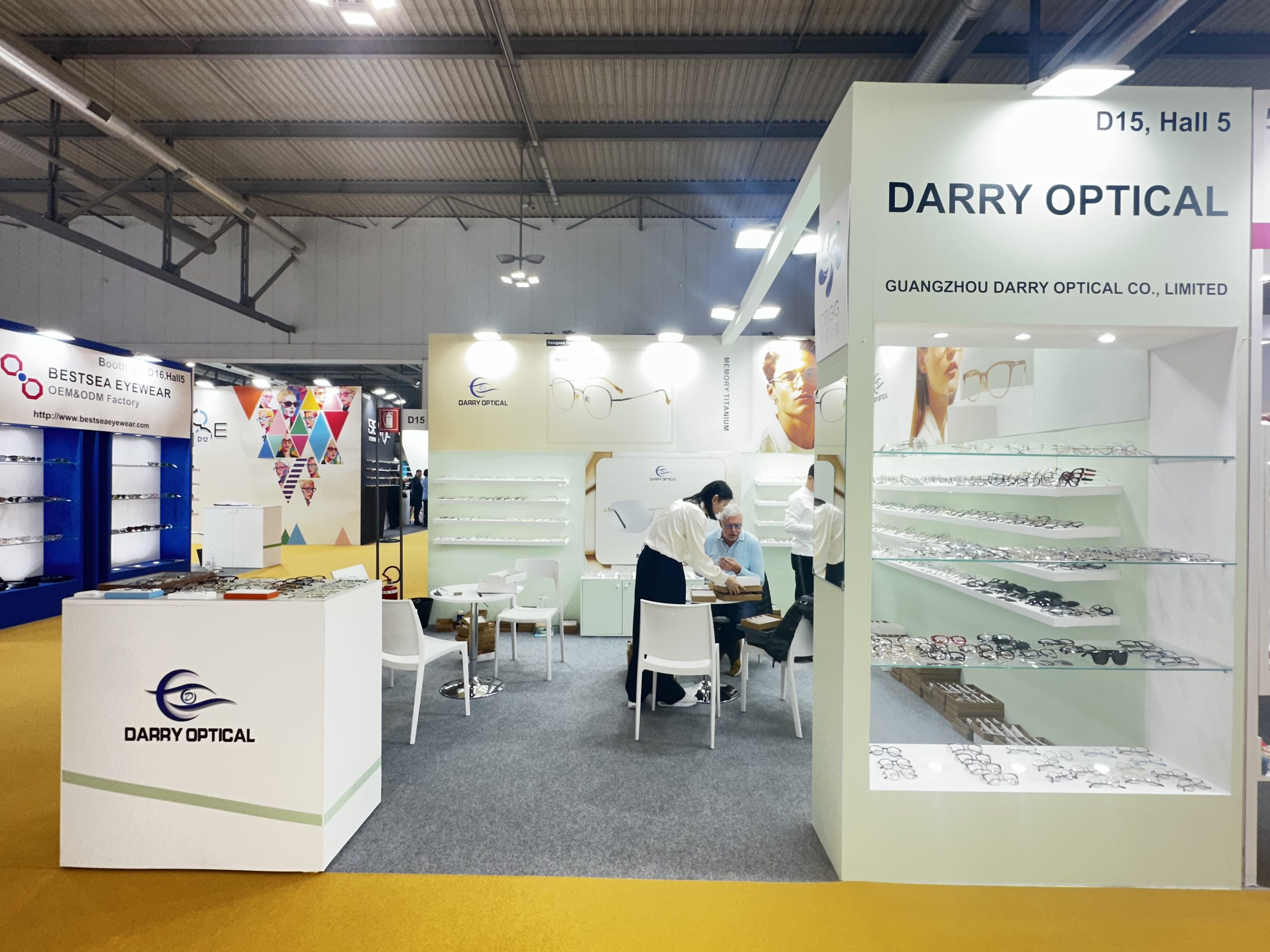
| Darry Optical Co., Ltd. | OEM/ODM services, diverse frame materials (acetate, metals, titanium, TR-90), advanced optical lens manufacturing (CR-39, photochromic, high-index resin), prescription and freeform progressive lens integration, CE/FDA/ISO 13485 certified. | Smart glasses brands seeking OEM/ODM, optical companies, eyewear brands. | Varies by project (OEM/ODM dependent) | OEM/ODM partner for various smart glasses platforms. |
| Meta (EssilorLuxottica) | AI assistant, 12MP camera, livestreaming, audio, prescription lenses, dynamic dimming (future) | Consumer (lifestyle, social, active) | $299 – $499 | Meta AI, Ray-Ban/Oakley brands, smartphone integration |
| Vuzix | Waveguide optics, rugged design, AI, high-res cameras, noise-cancelling mics, hot-swappable batteries | Enterprise (healthcare, manufacturing, field service, warehousing) | $499 – $2,499 | Android, OEM services, various enterprise software integrations |
| Epson (Moverio) | Si-OLED binocular display, see-through, durable, high FOV, hands-free | Enterprise (industrial, remote assistance, drone) | ~$700 – $2,500 | Android, ISV partners, Moverio SDK |
| RealWear | Voice-controlled, rugged, hands-free, high-res cameras, hot-swappable batteries, noise suppression | Enterprise (frontline workers, manufacturing, oil & gas, healthcare) | ~$1,500 – $2,500 | Android, Microsoft Teams, Zoom, TeamViewer, proprietary WearHF™ interface |
| Magic Leap | Patented optics, dynamic dimming, large FOV, powerful compute pack, hand/eye tracking | Enterprise (healthcare, industrial, design) | ~$2,300 – $3,300 | AOSP-based OS, cloud autonomy, MDM providers, open software standards |
| Xiaomi | Smart audio, AI assistant, changeable frames, electrochromic lenses, object recognition, mobile payments | Consumer (lifestyle, daily use) | ~$275 – $410 | Xiaomi HyperOS ecosystem, smartphone integration |
| XREAL | Micro-OLED display, large virtual screen, lightweight, gaming-focused, 3DoF/6DoF tracking | Consumer (gaming, personal cinema, productivity) | $197 – $399 | Android, iOS, Windows, macOS, Steam Deck, Switch, Google Android XR partnership |
| Rokid | Micro-OLED display, AI recognition, real-time translation, diopter adjustment, lightweight | Consumer (entertainment, productivity), some enterprise | ~$345 – $600 | Android, Google Play content, Alipay integration |
| RayNeo (TCL) | Micro-LED optical waveguide, full-color AR, AI features, cinematic audio, high refresh rates | Consumer (entertainment, gaming), some enterprise | $199 – $800 | Android, iOS, Windows, consoles, TCL ecosystem, Olympic partnership |
| Huawei | Open-ear audio, call noise cancellation, stylish design, potential AR/AI features, vision glass | Consumer (lifestyle, audio), some enterprise | ~$180 – $300 | HarmonyOS ecosystem, smartphone integration |
Conclusion
The smart glasses market is entering a new era, moving from niche applications to widespread adoption across work, healthcare, and everyday life. The industry has overcome early obstacles in design, battery life, and cost, proving that success relies on a balance of advanced technology and user-centered design. Key drivers such as AI integration, 5G connectivity, and multi-industry applicability are fueling sustained growth.
Looking ahead, continued advancements in miniaturization, battery efficiency, spatial computing, and cloud integration will make smart glasses more powerful, discreet, and intelligent. These devices are redefining human interaction, perception, and connectivity, marking the dawn of a truly smarter and more connected future.